

History
'For whatever was written in former days was written for our instruction,
that through endurance and through the encouragement of the Scriptures we might have hope.' Romans 15:4
At All Saints' we believe that a high-quality history education will help pupils gain a coherent knowledge and understanding of Britain’s past and that of the wider world. It should inspire pupils’ curiosity to know more about the past. Teaching should equip pupils to ask perceptive questions, think critically, weigh evidence, sift arguments, and develop perspective and judgement.
History helps pupils to understand the complexity of people’s lives, the process of change, the diversity of societies and relationships between different groups, as well as their own identity and the challenges of their time.
Statutory framework for the early years foundation stage
The National Curriculum History : Key stages 1 and 2
A love of history can begin in lots of different ways, one is to read fiction based on historical events. This allows children to find an area of history that interests them and fosters a love for the past. Here are a few books that have been suggested to do just that.
History Fiction Recommendations

History Club
At All Saints' we have a History club for Year 5 and 6 children. Children can research areas of history they are enjoy including : the Victorians, the Romans, the Vikings, World War 1 and 2, Henry VII, Greek Mythology and the Zulus! They use their historical investigative skills to ask questions and make objective judgments about the source material they find.
Historical Artefacts
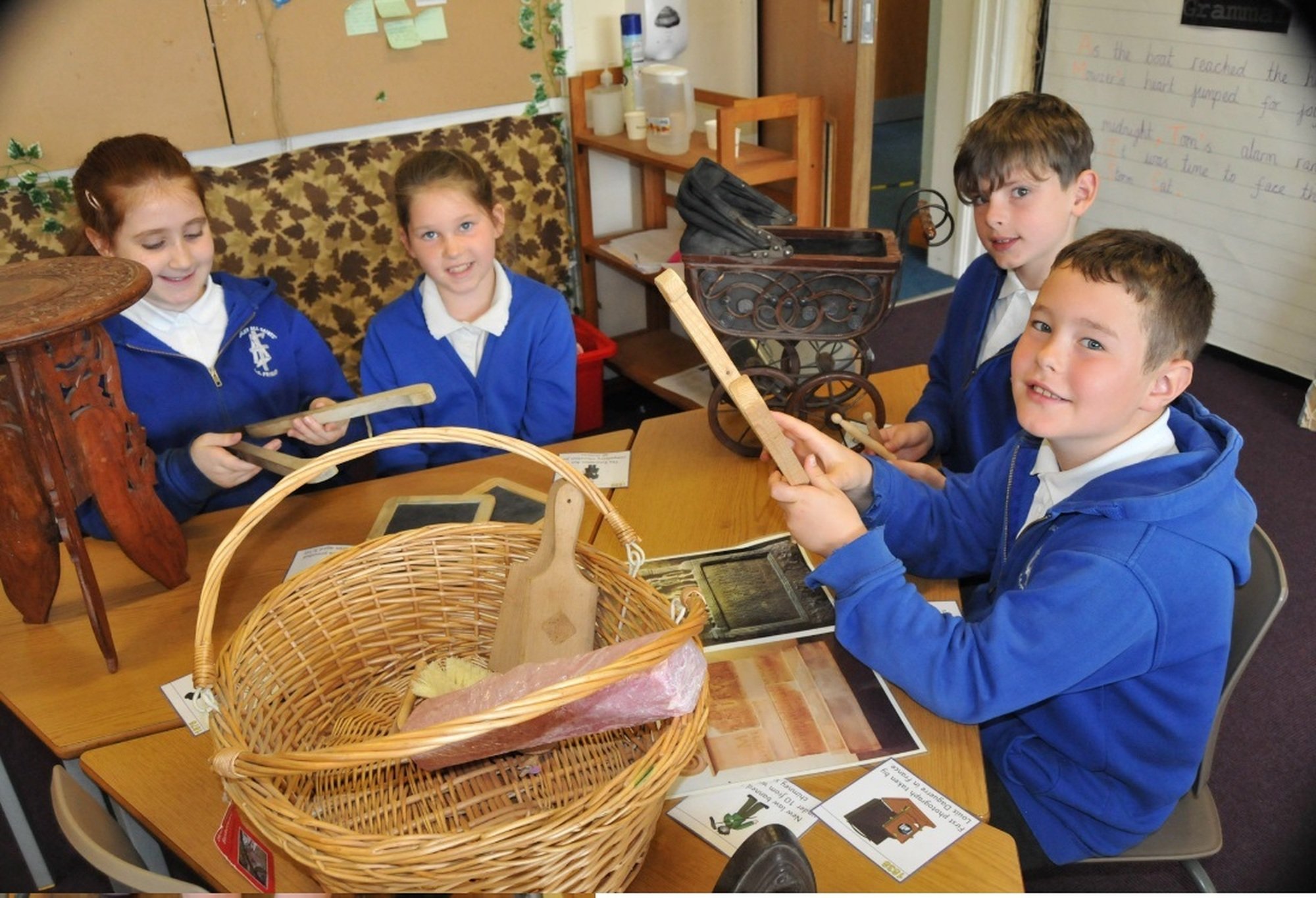
All our classes have the opportunity to look at artefacts from the period of history they are studying. Looking at historical artefacts in is important because it provides children tangible connections to the past, turning abstract historical concepts into concrete, relatable stories. These objects act as a "hook" that sparks natural curiosity and encourage the children to ask investigative questions like "Who used this?" or "What was it for?"
Handling real items, such as an old Victorian iron or a Roman coin, helps the children empathise with people from different periods by seeing the actual tools they used in daily life.
Websites to Support Home Learning
CBBC Horrible Histories
https://www.bbc.co.uk/cbbc/shows/horrible-histories
The Historical Association Topic Resources
https://www.history.org.uk/primary/resource/3620/primary-topic-websites
BBC Bitesize History for Key Stage 2
https://www.bbc.co.uk/bitesize/subjects/zcw76sg
Museum Artefacts
http://www.teachinghistory100.org/


